




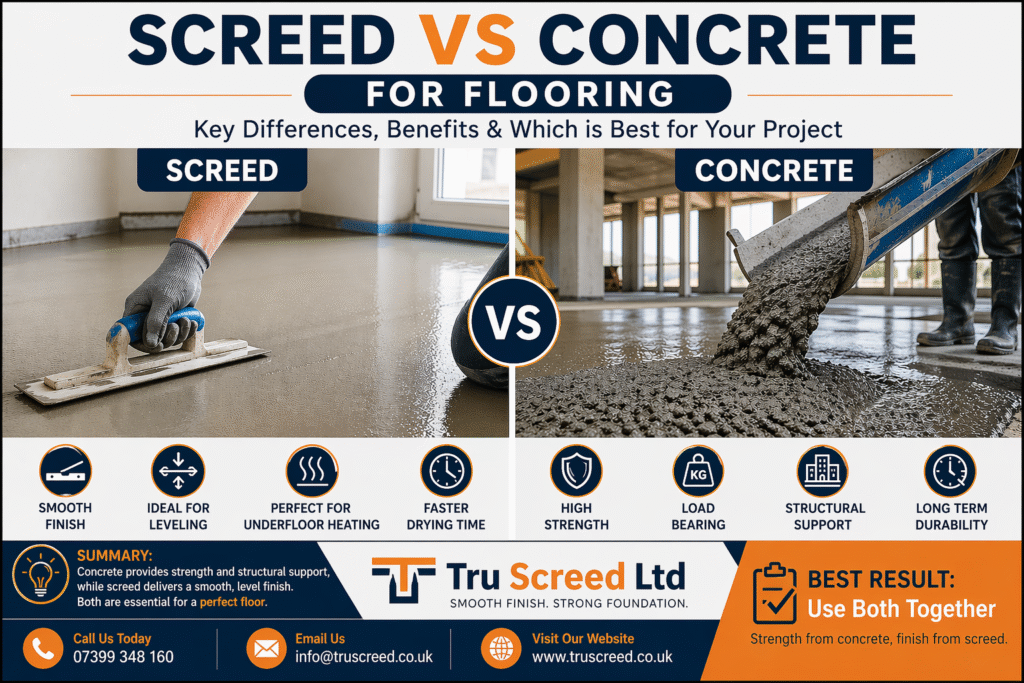
When planning a flooring project, one of the most common questions homeowners and contractors face is: screed vs concrete for flooring — which one should you choose? While both materials are essential in construction, they serve very different purposes. Understanding these differences is crucial to achieving a durable, level, and long-lasting floor.
In this guide, we’ll break down everything you need to know about screed and concrete, including their composition, uses, benefits, and which option is best suited for your project.
What is Concrete?
Concrete is a strong, structural material made from a mix of cement, water, sand, and coarse aggregates such as gravel or crushed stone. It is widely used in construction due to its durability and load-bearing capabilities.
Key Features of Concrete:
- High strength and durability
- Suitable for structural use
- Typically used in foundations and slabs
- Rough finish unless further treated
Concrete forms the base layer of most flooring systems. It provides the structural integrity needed to support buildings, heavy loads, and daily wear and tear.
What is Screed?
Screed is a finer mixture of cement, sand, and water, often without large aggregates. It is applied as a thin layer over a concrete base to create a smooth, level surface.
Key Features of Screed:
- Smooth and even finish
- Ideal for final floor preparation
- Usually applied in thinner layers
- Not designed for structural support
Screed acts as the top layer, preparing the surface for final floor coverings such as tiles, wood, vinyl, or carpet.
Screed vs Concrete for Flooring: The Key Differences
Understanding the difference between screed and concrete is essential when choosing the right material for your flooring project.
1. Purpose and Function
The main difference lies in their function:
- Concrete is used for structural strength and forms the foundation of a floor.
- Screed is used for levelling and smoothing the surface before the final finish is applied.
Concrete carries the load, while screed ensures the surface is perfectly flat and ready for finishing.
2. Composition
Concrete contains larger aggregates like gravel, making it strong but rough in texture. Screed, on the other hand, uses finer sand and has a smoother consistency.
This difference in composition is why concrete is ideal for heavy-duty use, while screed is better suited for finishing work.
3. Thickness
- Concrete is typically laid at a thickness of 100mm or more.
- Screed is usually applied in layers ranging from 25mm to 75mm, depending on the application.
Because screed is thinner, it cannot replace concrete as a structural base.
4. Surface Finish
Concrete surfaces are generally rough and uneven unless polished or treated. Screed provides a smooth, level surface, making it ideal for installing floor coverings.
5. Drying Time
Drying time is another important factor:
- Concrete takes longer to cure fully, often requiring several weeks.
- Screed dries faster, especially modern fast-drying or liquid screeds.
However, both materials require proper curing to prevent cracking and ensure durability.
6. Application Process
Concrete is usually poured and levelled using heavy equipment, while screed is applied more precisely to achieve a smooth finish.
There are different types of screed, including:
- Traditional sand and cement screed
- Liquid or self-levelling screed
- Fast-drying screed
Each type offers specific benefits depending on the project.
When Should You Use Concrete?
Concrete is essential when you need a strong, load-bearing base. It is commonly used for:
- Building foundations
- Ground floor slabs
- Driveways and garages
- Industrial flooring
If your flooring needs to support heavy loads or provide structural stability, concrete is the right choice.
When Should You Use Screed?
Screed is used after the concrete base has been laid. It is ideal for:
- Levelling uneven surfaces
- Preparing floors for tiles, wood, or carpet
- Encasing underfloor heating systems
- Achieving a smooth, professional finish
Without screed, it would be difficult to achieve the flat, polished look required for modern interiors.
Can Screed Replace Concrete?
A common misconception in the screed vs concrete for flooring debate is whether screed can replace concrete.
The short answer is no.
Screed does not have the strength required for structural use. It is designed purely as a finishing layer. Using screed instead of concrete as a base could lead to cracking, instability, and long-term damage.
The Role of Screed in Underfloor Heating
One of the biggest advantages of screed is its compatibility with underfloor heating systems.
Liquid screeds, in particular, are excellent for:
- Even heat distribution
- Reducing air gaps
- Improving energy efficiency
This makes screed an essential component in modern, energy-efficient homes across the UK.
Cost Comparison: Screed vs Concrete
Cost is always a key consideration in any project.
- Concrete is generally more expensive due to its structural role and materials.
- Screed is usually cheaper per layer but adds to the overall cost as an additional step.
However, skipping screed to save money is not advisable, as it can compromise the quality of your flooring.
Common Mistakes to Avoid
When deciding between screed vs concrete for flooring, there are a few common mistakes to watch out for:
- Using screed as a structural base
- Not allowing enough drying time
- Applying screed unevenly
- Skipping screed altogether for finished flooring
Working with experienced professionals ensures that both materials are applied correctly for the best results.
Which is Better: Screed or Concrete?
The truth is, this isn’t a case of one being better than the other. Both materials are essential and serve different purposes.
- Choose concrete for strength and structural support.
- Choose screed for a smooth, level finish.
In most flooring projects, the best solution is to use both together.
Final Thoughts
When it comes to screed vs concrete for flooring, understanding their roles is key to achieving a high-quality finish. Concrete provides the strength your floor needs, while screed delivers the smooth surface required for a flawless final result.
By using the right materials in the right way, you can ensure your flooring is durable, level, and built to last.

