




Tru Screed · Cement-Based Flowing Screed
Cemfloor Screed: A Guide for Residential and Commercial Projects
Choosing a screed involves more than finding a material that creates a level floor. Installation arrangements, drying, heating requirements and the final floor covering all need to work together.
Explore Cemfloor screed products with Tru Screed and discover the key questions to consider when planning your floor.
What Is Cemfloor?
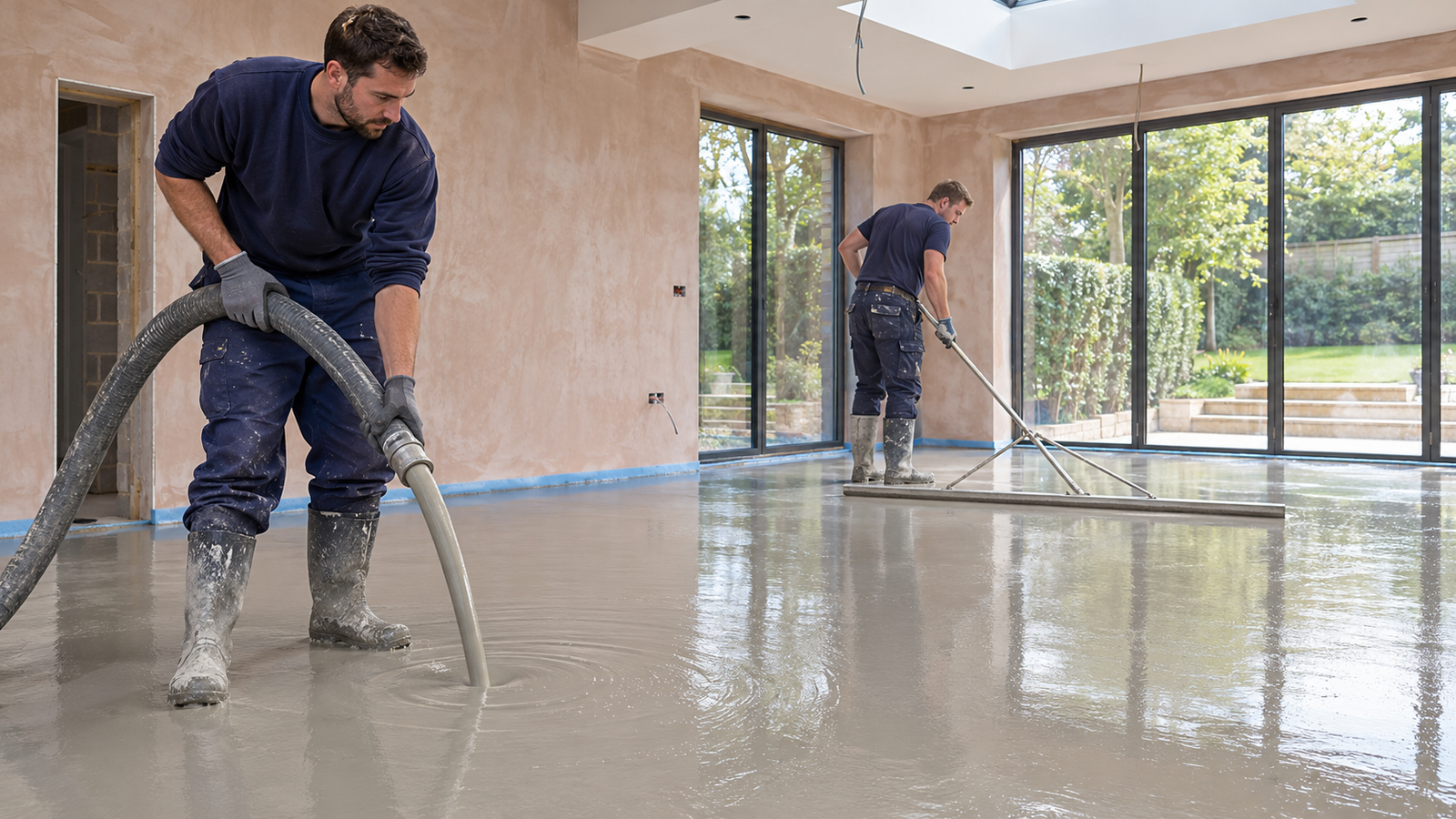
Cemfloor is a range of cement-based flowing screed products used in residential and commercial flooring projects. Product selection should reflect the intended application and the complete floor construction.
When considering Cemfloor screed, discuss the substrate, proposed floor build-up and intended finish with the project team. These details help establish an appropriate specification before installation is arranged.
- Property type: explain whether the work concerns a home, commercial premises or a wider development.
- Floor construction: provide available information about the base and proposed build-up.
- Heating requirements: identify whether underfloor heating forms part of the design.
- Final finish: share the proposed floor covering so its requirements can be considered early.
Foot Traffic and Drying Are Different Milestones
Early access can be useful when organising a construction programme. Cemfloor guidance commonly refers to light foot traffic after approximately 24–48 hours, depending on the product and site conditions.
However, being able to walk on Cemfloor screed does not mean it is ready for floor coverings, heavy loads or unrestricted site activity. Each stage needs to follow the applicable product guidance.
Early Access
Confirm when light foot traffic is permitted for the installed product. Do not treat this as permission for storage, equipment or heavy construction traffic.
Readiness for Floor Coverings
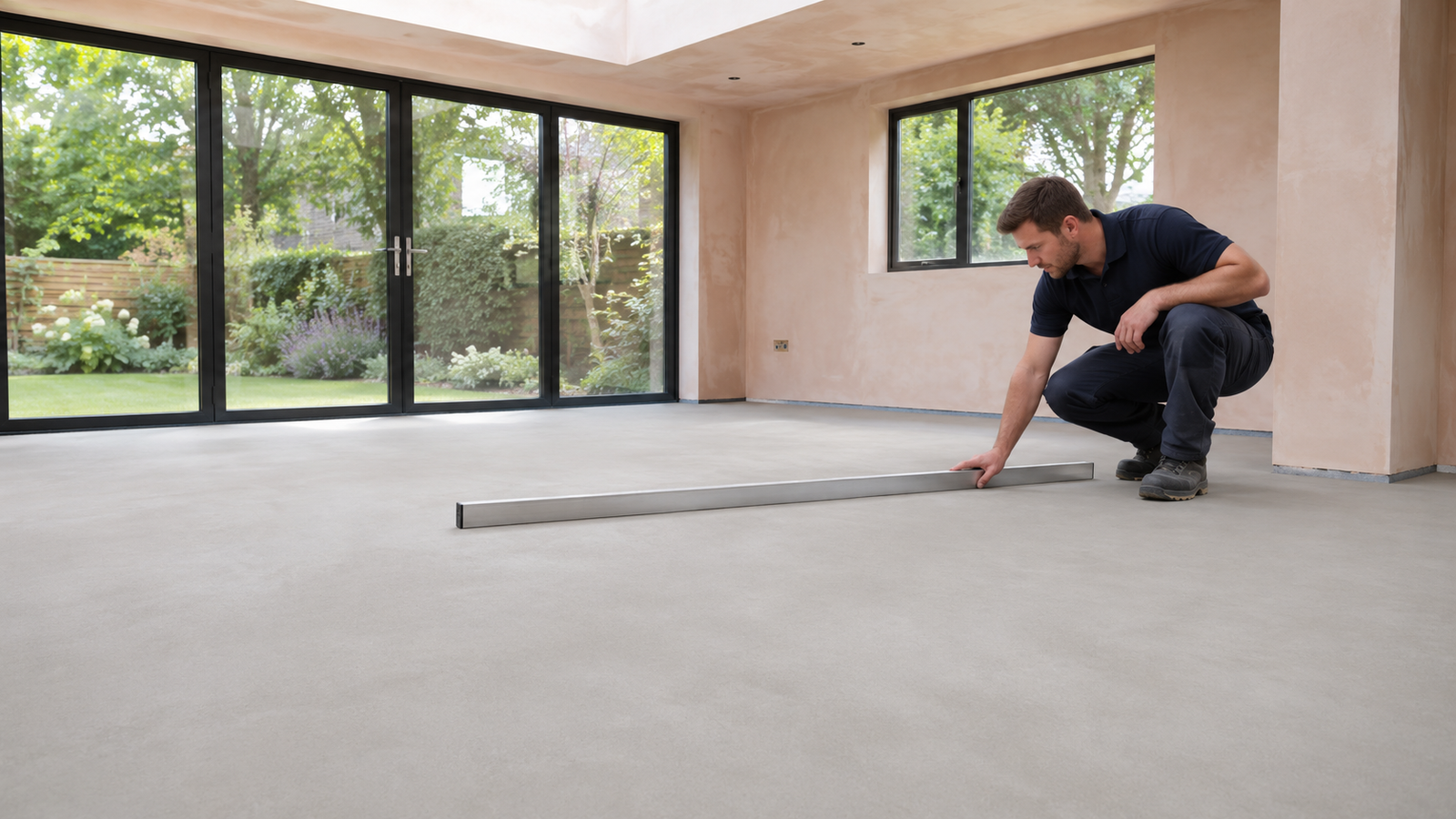
The flooring installer needs to confirm the screed meets the requirements of the chosen covering and installation system, including moisture conditions.
Planning Around Underfloor Heating
Cemfloor can be specified with underfloor heating. Its thermal performance is relevant to this application, but the complete system needs coordinated design and installation.
When discussing Cemfloor screed, include the heating layout and proposed floor finish. Explore Tru Screed’s liquid screed for underfloor heating information as part of your project planning.
- Coordinate the design: share heating specifications with the screeding and flooring teams.
- Confirm the build-up: agree the relevant screed specification and installation requirements.
- Plan commissioning: establish the required heating procedure for the selected product.
- Allow for the final covering: check its requirements before confirming the installation programme.
Consider Floor Coverings and Adhesives Together
The cement-based composition offers compatibility advantages with cementitious flooring products. Even so, compatibility should be confirmed for the specific combination of screed, preparation materials, adhesive and covering.
Before covering Cemfloor screed, agree who will check the substrate and confirm readiness. Avoid ordering the final flooring around an assumed drying date alone.
- Chosen covering: identify the exact flooring product where possible.
- Preparation: confirm any surface preparation required by the installation system.
- Adhesives and primers: check the proposed products are suitable together.
- Moisture assessment: agree the required checks and acceptance criteria with the flooring installer.
Prepare a Clear Project Brief
A useful enquiry describes the floor area, site access and intended construction sequence. Drawings and photographs can help explain details that are difficult to communicate through measurements alone.
To discuss Cemfloor screed with Tru Screed, provide the information available and flag anything still being confirmed. This creates a clearer starting point for the next steps.
- Site details: include the postcode, project type and main contact.
- Floor area: provide dimensions or drawings showing the areas involved.
- Access: explain delivery restrictions and the location of the proposed work.
- Programme: share target dates and related heating or flooring appointments.
- Scope: clarify preparation, installation and any associated services required.
Frequently Asked Questions
Can Cemfloor be used in homes and commercial properties?
The range includes cement-based products for residential and commercial applications. The appropriate product and specification depend on the individual project.
Is Cemfloor screed fully dry after 24 hours?
No. Early light foot traffic and readiness for floor coverings are different milestones. Follow the selected product’s instructions and the flooring system’s requirements.
Can it be used with underfloor heating?
Cemfloor can be specified for heated floors. Coordinate the screed, heating and floor covering requirements, including the commissioning procedure.
How do I request a quotation?
Use the Contact page to share your site postcode, floor area, proposed build-up and preferred timing.
Discuss Cemfloor for Your Next Project
Planning a residential or commercial floor? Contact Tru Screed to discuss Cemfloor screed, your installation requirements and the next steps.

