




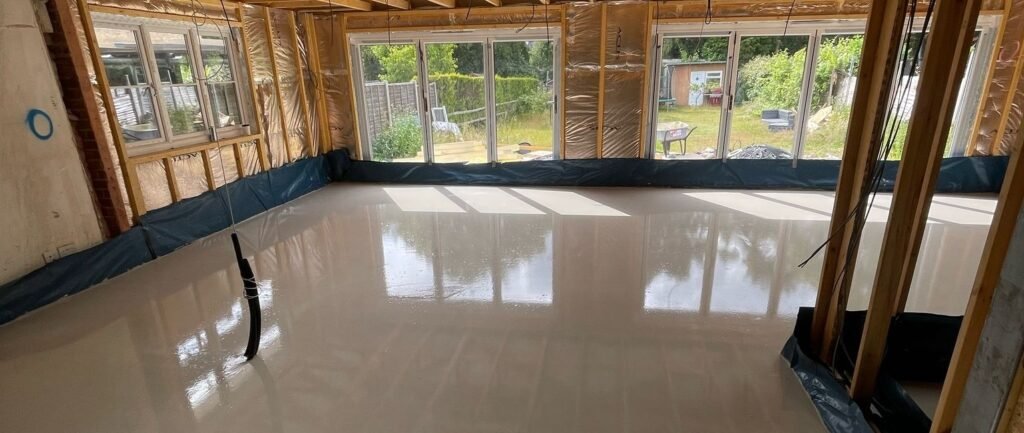
Floor screeding has become an essential part of modern construction and renovation across the UK. Whether you’re preparing a new build, extending your home, installing underfloor heating, or improving uneven floors, a well-laid screed provides the strong and level foundation every project needs. For homeowners and contractors in Surrey and surrounding regions, choosing the right screeding specialists is just as important as selecting the correct materials.
This guide explains everything you need to know about floor screeding—how it works, why it matters, what types of screeds are available, and how professional installation ensures long-lasting results.
What Is Floor Screeding and Why Is It Important?
Screeding is the process of applying a specially mixed material to create a smooth, even surface ready for flooring. A high-quality screed is essential because it supports the final floor layer—whether that’s tiles, vinyl, carpets, laminate or hardwood—and prevents issues such as cracking, unevenness, and movement.
A well-installed screed provides:
- A perfectly level base for flooring
- Improved structural strength
- Protection for underfloor heating systems
- Better load distribution
- Long-lasting stability
Without a reliable screed, even the most premium flooring materials can fail over time.
Where Screeding Is Commonly Used
Floor screeding is not limited to large-scale construction. It is widely used across homes, commercial buildings and refurbishment projects.
Common applications include:
- Home extensions
- New builds
- Kitchen and living room renovations
- Garage conversions
- Underfloor heating systems
- Industrial and commercial spaces
- Apartment developments
For many homeowners, screeding is one of the most important steps before laying the final floor finish.
The Benefits of Professional Screeding
Although DIY screeding may seem straightforward, achieving a flawless and durable finish requires skill, accuracy, and specialist equipment. Professional screeders ensure the right mix, thickness, drying conditions and finishing techniques are used for each project.
Key benefits of professional screeding include:
- Consistent depth and accuracy
- Faster installation and curing times
- Long-term durability
- Reduced risk of cracking and shrinkage
- Perfect compatibility with underfloor heating
- Smooth, precise levels for final flooring
When a screed is properly installed, it enhances the entire structure of your floor.
Types of Screeding Used in Modern Construction
Today’s flooring industry offers several types of screeds, each designed to perform differently depending on the needs of the project. Choosing the right one ensures maximum strength and performance.
1. Traditional Sand and Cement Screed
A classic, reliable option commonly used for general flooring. It is durable and can be reinforced for additional strength.
2. Liquid Flowing Screed
Increasingly popular because it can be poured quickly and spreads evenly on its own. Ideal for large areas and underfloor heating.
3. Fast-Drying Screed
Designed for projects where time is limited. It significantly reduces waiting times before flooring can be installed.
4. Fibre-Reinforced Screed
Perfect for preventing cracking and shrinkage, especially in areas with underfloor heating.
5. Self-Levelling Screed
Provides an ultra-smooth finish suitable for delicate flooring such as vinyl or high-end laminate.
Each type has its own advantages, and professional screeders will recommend the right option based on the condition of your subfloor and the final flooring you plan to install.
The Screeding Process: What Homeowners Can Expect
Understanding the process helps homeowners appreciate the level of skill and preparation involved. While methods vary depending on the type of screed used, the general steps usually include:
Surface Preparation
The subfloor must be clean, dust-free and structurally sound. Any cracks or gaps are repaired to ensure an even base.
Priming and Insulation
Depending on the project, a primer, damp-proof membrane, insulation boards or edge strips may be installed.
Setting Levels
Laser equipment and markers are used to measure precise floor heights.
Mixing and Application
Materials are mixed accurately, delivered to the site, and applied in a controlled, even layer.
Finishing and Curing
The screed is smoothed out, allowed to dry naturally, and checked for accuracy.
Professional teams ensure that every stage is completed with precision so the final floor remains stable for years to come.
Screeding for Underfloor Heating Systems
Underfloor heating has become extremely popular in modern UK homes. For these systems, flowing liquid screed is often the best choice because it wraps around pipes, eliminates air pockets and ensures maximum heat efficiency.
Benefits include:
- Faster heat transfer
- Even heat distribution
- Reduced energy consumption
- A stronger bond between floor layers
A well-laid screed ensures the heating system performs at its full potential.
How Long Does Screed Take to Dry?
Drying times depend on the type of screed used, the thickness and room conditions. As a general guideline:
- Traditional screed: 1mm per day
- Fast-drying screed: up to 5 times quicker
- Liquid screed: walkable within 24–48 hours
Humidity, ventilation and temperature also affect the drying process. Professionals will advise on when the final flooring can be installed safely.
Signs You Need Screeding in Your Property
Screeding may be required if your floor shows:
- Uneven or sloping areas
- Cracks in the surface
- Loose flooring or movement underfoot
- Poor insulation
- Damp patches or moisture issues
- Problems with existing screed layers
Whether it’s a refurbishment project or a new installation, screeding helps create a smooth and reliable base.
Why Choose a Specialist Screeding Company?
Working with specialists means the job is completed safely, efficiently, and at the highest standard. Experienced screeders understand the complexities of materials, drying times, temperature control and finishing techniques.
A specialist company ensures:
- High-quality workmanship
- Accurate levelling
- Reliable equipment and materials
- Knowledge of building regulations
- A clean, professional finish
For homeowners who want long-lasting results, choosing experts is the best investment.
Final Thoughts
Floor screeding is one of the most important stages of any flooring or renovation project. It ensures strength, stability and a flawless finish for your final flooring. Whether you’re installing underfloor heating, renovating a room or preparing a large commercial space, professional screeding offers durability and precision that DIY solutions cannot match.
With the right experts, modern materials and the correct type of screed, your floors will stay strong, smooth and perfectly level for decades.
Contact us today to discuss your screeding requirements or book a site visit.

