




When undertaking a flooring project, one of the most important considerations is timing. A common and crucial question is: how long does floor screed take to dry? The answer directly impacts when you can safely install your final floor covering.
Drying screed too quickly—or not allowing enough time—can lead to cracking, uneven surfaces, or flooring failure. This guide explains drying times, key factors, and best practices for projects across the UK.
What Is Floor Screed?
Floor screed is a layer of material, typically made from cement and sand, applied over a concrete subfloor. Its purpose is to create a smooth, level surface suitable for the installation of tiles, timber, vinyl, or carpet.
Screed also:
- Protects the structural concrete beneath
- Supports underfloor heating systems
- Improves the overall durability of the floor
How Long Does Floor Screed Take to Dry?
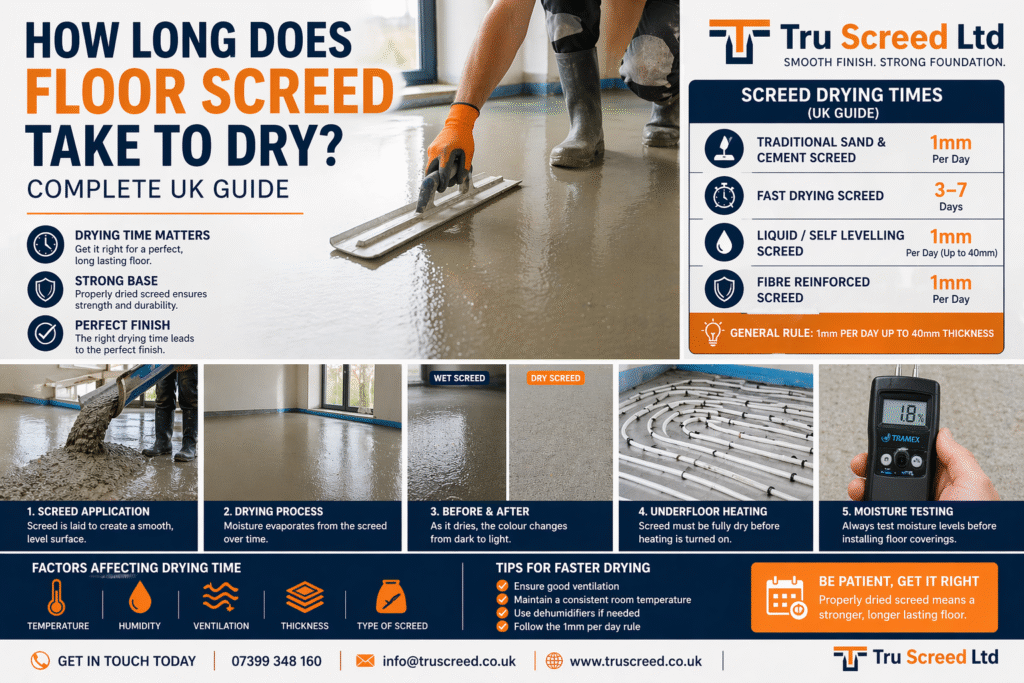
Drying time depends on the type of screed, its thickness, and site conditions such as temperature and humidity.
General Rule of Thumb (UK Standard):
- Up to 40mm thickness: approximately 1mm per day
- Above 40mm: drying slows and may take longer per millimetre
Typical Drying Times by Screed Type
Traditional Sand and Cement Screed
This is the most commonly used screed in UK construction.
- Drying rate: around 1mm per day
- Example:
- 50mm screed = approximately 50 days drying time
- Suitable for: residential and standard commercial projects
Fast-Drying Screed
Designed for projects with tight deadlines.
- Walkable: often within 24 hours
- Floor coverings: typically ready within 7–21 days
- Ideal for: renovations and time-sensitive installations
Liquid (Self-Levelling) Screed
A modern solution, often used with underfloor heating.
- Drying rate: similar to 1mm per day (up to 40mm)
- Provides a highly level surface
- Can dry faster in thinner applications
Fibre-Reinforced Screed
Contains fibres to improve strength and reduce shrinkage.
- Drying time: similar to traditional screed
- Benefit: reduced risk of cracking
Drying vs Curing: Understanding the Difference
It is important to distinguish between drying and curing:
- Drying refers to the evaporation of moisture from the screed
- Curing is the chemical process that gives screed its strength
A screed surface may appear dry while still containing moisture underneath. This is why moisture testing is essential before laying flooring.
Factors Affecting Screed Drying Time
Several variables influence how long screed takes to dry in UK conditions:
Thickness
Thicker screed layers take significantly longer to dry.
Temperature
Warm conditions promote faster drying. Cold weather, common in the UK, can slow the process.
Ventilation
Good airflow helps moisture evaporate. Poorly ventilated spaces will delay drying.
Humidity
High humidity levels slow down moisture evaporation, extending drying times.
Type of Screed
Fast-drying products can dramatically reduce waiting periods compared to traditional mixes.
When Can You Walk on Screed?
- Traditional screed: typically 24–48 hours
- Fast-drying screed: often within 24 hours
This only allows light foot traffic. It does not mean the screed is ready for final flooring.
When Can You Lay Floor Coverings?
Before installing any flooring, the screed must reach acceptable moisture levels.
Industry Guideline:
- Moisture level should be 75% relative humidity (RH) or lower
Estimated Timeframes:
- Tiles:
- Fast screed: 2–3 weeks
- Traditional screed: longer depending on thickness
- Wood or laminate flooring:
- Requires fully dry screed
- Can take several weeks to months
Moisture testing using professional equipment is strongly recommended.
How to Speed Up Screed Drying
If timelines are tight, the following methods can help:
- Choose a fast-drying screed from the outset
- Maintain consistent room temperature
- Ensure adequate ventilation
- Use dehumidifiers if required
- Gradually introduce underfloor heating after initial curing
Avoid forcing rapid drying, as this may lead to cracking or structural weakness.
Common Mistakes to Avoid
To ensure a successful flooring installation, avoid the following:
- Installing flooring before the screed is fully dry
- Failing to test moisture levels
- Poor site ventilation
- Using the wrong screed type for the project
- Ignoring manufacturer recommendations
These issues can result in costly repairs and long-term damage.
Screed Drying in UK Conditions
The UK climate presents specific challenges:
- Cooler temperatures slow drying
- High humidity increases moisture retention
- Winter conditions can significantly extend timelines
Planning ahead and selecting the appropriate screed type is essential for avoiding delays.
Final Thoughts
So, how long does floor screed take to dry? In most cases:
- Traditional screed dries at approximately 1mm per day
- Fast-drying screeds can be ready within days or weeks
However, every project is different. Rushing the process can compromise the quality and durability of your flooring. Proper drying time and moisture testing are critical to achieving a professional finish.

